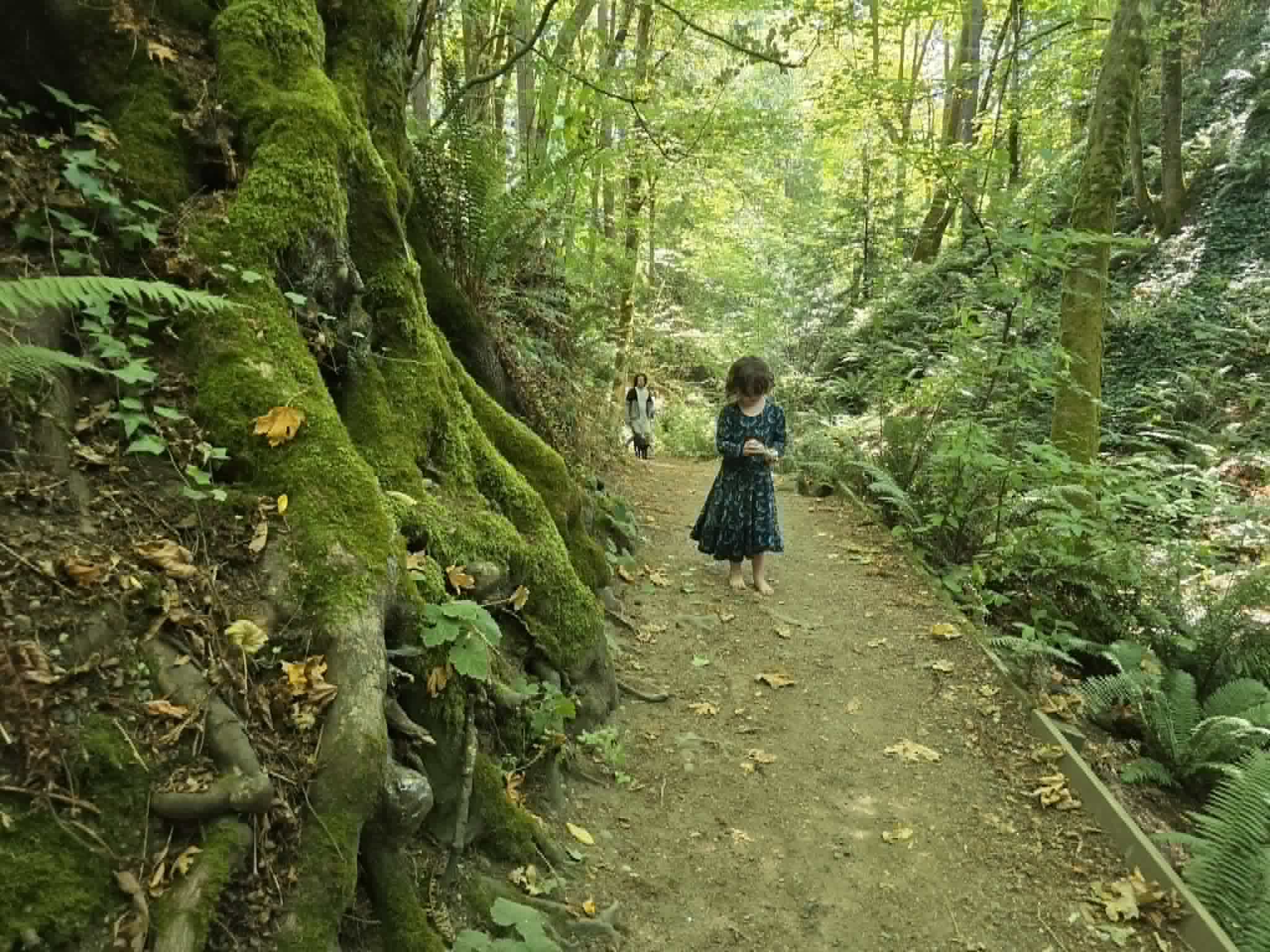
What Nature Can Teach Us About Regeneration

What Nature Can Teach Us About Regeneration

Nature has been one of my greatest teachers for as long as I can remember.

I first came to regeneration through environmental education and sustainability. But over time, I realized that nature wasn’t simply the place where I learned about regeneration.

Nature was showing me what regeneration actually is.

When I look closely at the natural world, I don’t see a system that is constantly optimizing itself.

I see cycles.

Rest and growth.

Death and renewal. New seedlings grow a top old stumps and fallen trees. 

Expansion and contraction.

Abundance and dormancy. 

Leaves bursting forth in fall, and then falling before the cold winter begins.

Nothing in nature is trying to be productive every minute of every day.

And yet, somehow, life continues.

Nature Doesn’t Rush the Process

One of the things I find most beautiful about nature is that it doesn’t seem particularly concerned with our timelines.

A seed doesn’t become a tree because someone told it to hurry up.

A forest doesn’t regenerate by forcing every individual tree to grow faster.

There are seasons for growth and seasons for rest. There are periods of abundance and periods of scarcity. There are times when something looks like it is doing nothing at all, when underneath the surface something essential is happening.

I think there is something here for us.

So much of modern life asks us to constantly accelerate.

Do more.

Become more.

Produce more.

Improve faster.

But regeneration asks us to pay attention to a different rhythm.

What if growth doesn’t always require force?

What if sometimes the conditions need to change before growth can happen?

What if what looks like rest is actually part of the process?

At one time in my life, I tried so hard to optimize every part of it that it felt like the only way to success was to do more, be more, have more of every moment of the day.

The shadows of that time still pervades my life, as I catch myself rushing the little moments and skipping the important rest times. 

I don’t share any of this to say “I have regenerated”. No, I share this to say I am actively regenerating in the here and now. 

Seeing my patterns and shifting them. Slowing my way of being and trusting that the work will happen, even in the quiet moments. 

Learning from all the natural world has to teach. 

Nature Doesn’t Separate Rest From Growth

This is something I’ve been thinking about a lot.

Rest is part of regeneration, but regeneration isn’t only rest.

Nature doesn’t stay dormant forever.

Winter gives way to spring.

Seeds sprout.

Plants reach toward the sun.

Animals move, eat, play, reproduce, migrate, build, and create.

There is both yin and yang.

Stillness and movement.

Receiving and giving.

Restoration and expression.

A regenerative life needs both.

We need enough rest to restore ourselves, but we also need meaningful movement, contribution, creativity, and engagement.

Regeneration isn’t about doing less for the sake of doing less.

It’s about finding a rhythm that allows life to continue.

Nature Is Not Separate From Us

The deeper I go into this idea, the more I question the distinction we often make between humans and nature.

We talk about spending time in nature as though nature is somewhere else.

We go “out into nature.”

We visit a forest.

We take a hike.

We return home.

But what if we stopped thinking of ourselves as separate from the natural world?

What if we remembered that we are nature?

Our bodies are nature.

Our food comes from nature.

The air we breathe, the water we drink, the microorganisms living within us, all of it is part of a larger living system.

And if that is true, then perhaps the principles of regeneration aren’t simply something we can observe outside ourselves.

They are already within us.

Nature as a Guide

This is where nature becomes much more than an interest for me.

Nature is foundational to the way I think about life.

In some ways, nature is my philosophy, my religion and my guidebook. 

It is one of the places I look when I want to understand how to live well and within our divine principles. 

I don’t mean that nature gives us a simple answer to every human problem. Life is more complicated than that.

But nature gives us patterns.

It reminds us that nothing exists in isolation.

That diversity creates resilience.

That waste from one part of a system can become nourishment for another.

That everything has seasons.

That death can become the beginning of new life.

That relationships matter.

That health isn’t simply about the individual organism, but about the systems and relationships that surround it.

These are lessons I want to keep bringing into my own life.

What Would It Mean to Live More Like Nature?

I don’t think the answer is to abandon modern life and run into the woods.

Although when I was a teenager, I thought it was. I still have a folded up piece of paper in my keepsakes from when my best friend and I planned to do it. 

It was our game plan, what we would bring, where we would go. 

But somewhere along the way of growing up, I learned running away is not the answer I am looking for.

For me, it is much more subtle now.

It might mean asking better questions.

Instead of asking, “How can I get more done?” I might ask, “What would allow me to do this in a way that leaves me more alive?”

Instead of asking, “How can I eliminate every period of rest?” I might ask, “What season am I in?”

Instead of asking, “How can I control everything?” I might ask, “What conditions can I create and then allow to unfold?”

Instead of seeing myself as an isolated individual who needs to constantly improve, I might remember that I am part of families, communities, ecosystems, and relationships.

And perhaps most importantly, I can remember that regeneration is not something I have to invent.

It is something I can learn to participate in.

Nature has been regenerating for a very long time.

Maybe part of our work is simply learning how to listen.

Nature has been one of my greatest teachers for as long as I can remember.

I first came to regeneration through environmental education and sustainability. But over time, I realized that nature wasn’t simply the place where I learned about regeneration.

Nature was showing me what regeneration actually is.

When I look closely at the natural world, I don’t see a system that is constantly optimizing itself.

I see cycles.

Rest and growth.

Death and renewal. New seedlings grow a top old stumps and fallen trees. 

Expansion and contraction.

Abundance and dormancy. 

Leaves bursting forth in fall, and then falling before the cold winter begins.

Nothing in nature is trying to be productive every minute of every day.

And yet, somehow, life continues.

Nature Doesn’t Rush the Process

One of the things I find most beautiful about nature is that it doesn’t seem particularly concerned with our timelines.

A seed doesn’t become a tree because someone told it to hurry up.

A forest doesn’t regenerate by forcing every individual tree to grow faster.

There are seasons for growth and seasons for rest. There are periods of abundance and periods of scarcity. There are times when something looks like it is doing nothing at all, when underneath the surface something essential is happening.

I think there is something here for us.

So much of modern life asks us to constantly accelerate.

Do more.

Become more.

Produce more.

Improve faster.

But regeneration asks us to pay attention to a different rhythm.

What if growth doesn’t always require force?

What if sometimes the conditions need to change before growth can happen?

What if what looks like rest is actually part of the process?

At one time in my life, I tried so hard to optimize every part of it that it felt like the only way to success was to do more, be more, have more of every moment of the day.

The shadows of that time still pervades my life, as I catch myself rushing the little moments and skipping the important rest times. 

I don’t share any of this to say “I have regenerated”. No, I share this to say I am actively regenerating in the here and now. 

Seeing my patterns and shifting them. Slowing my way of being and trusting that the work will happen, even in the quiet moments. 

Learning from all the natural world has to teach. 

Nature Doesn’t Separate Rest From Growth

This is something I’ve been thinking about a lot.

Rest is part of regeneration, but regeneration isn’t only rest.

Nature doesn’t stay dormant forever.

Winter gives way to spring.

Seeds sprout.

Plants reach toward the sun.

Animals move, eat, play, reproduce, migrate, build, and create.

There is both yin and yang.

Stillness and movement.

Receiving and giving.

Restoration and expression.

A regenerative life needs both.

We need enough rest to restore ourselves, but we also need meaningful movement, contribution, creativity, and engagement.

Regeneration isn’t about doing less for the sake of doing less.

It’s about finding a rhythm that allows life to continue.

Nature Is Not Separate From Us

The deeper I go into this idea, the more I question the distinction we often make between humans and nature.

We talk about spending time in nature as though nature is somewhere else.

We go “out into nature.”

We visit a forest.

We take a hike.

We return home.

But what if we stopped thinking of ourselves as separate from the natural world?

What if we remembered that we are nature?

Our bodies are nature.

Our food comes from nature.

The air we breathe, the water we drink, the microorganisms living within us, all of it is part of a larger living system.

And if that is true, then perhaps the principles of regeneration aren’t simply something we can observe outside ourselves.

They are already within us.

Nature as a Guide

This is where nature becomes much more than an interest for me.

Nature is foundational to the way I think about life.

In some ways, nature is my philosophy, my religion and my guidebook. 

It is one of the places I look when I want to understand how to live well and within our divine principles. 

I don’t mean that nature gives us a simple answer to every human problem. Life is more complicated than that.

But nature gives us patterns.

It reminds us that nothing exists in isolation.

That diversity creates resilience.

That waste from one part of a system can become nourishment for another.

That everything has seasons.

That death can become the beginning of new life.

That relationships matter.

That health isn’t simply about the individual organism, but about the systems and relationships that surround it.

These are lessons I want to keep bringing into my own life.

What Would It Mean to Live More Like Nature?

I don’t think the answer is to abandon modern life and run into the woods.

Although when I was a teenager, I thought it was. I still have a folded up piece of paper in my keepsakes from when my best friend and I planned to do it. 

It was our game plan, what we would bring, where we would go. 

But somewhere along the way of growing up, I learned running away is not the answer I am looking for.

For me, it is much more subtle now.

It might mean asking better questions.

Instead of asking, “How can I get more done?” I might ask, “What would allow me to do this in a way that leaves me more alive?”

Instead of asking, “How can I eliminate every period of rest?” I might ask, “What season am I in?”

Instead of asking, “How can I control everything?” I might ask, “What conditions can I create and then allow to unfold?”

Instead of seeing myself as an isolated individual who needs to constantly improve, I might remember that I am part of families, communities, ecosystems, and relationships.

And perhaps most importantly, I can remember that regeneration is not something I have to invent.

It is something I can learn to participate in.

Nature has been regenerating for a very long time.

Maybe part of our work is simply learning how to listen.

Leave a Reply

Your email address will not be published. Required fields are marked *

Leave a Reply

Your email address will not be published. Required fields are marked *

Join the Regenerate My Life Newsletter

Receive reflections, tools, and inspiration for a regenerative life.

Subscribe

Join the Regenerate My Life Newsletter

Receive reflections, tools, and inspiration for a regenerative life.